
Educational Article
Learn about this brassica crop of the Andean highlands, from its classification and form to its cultivation cycle.
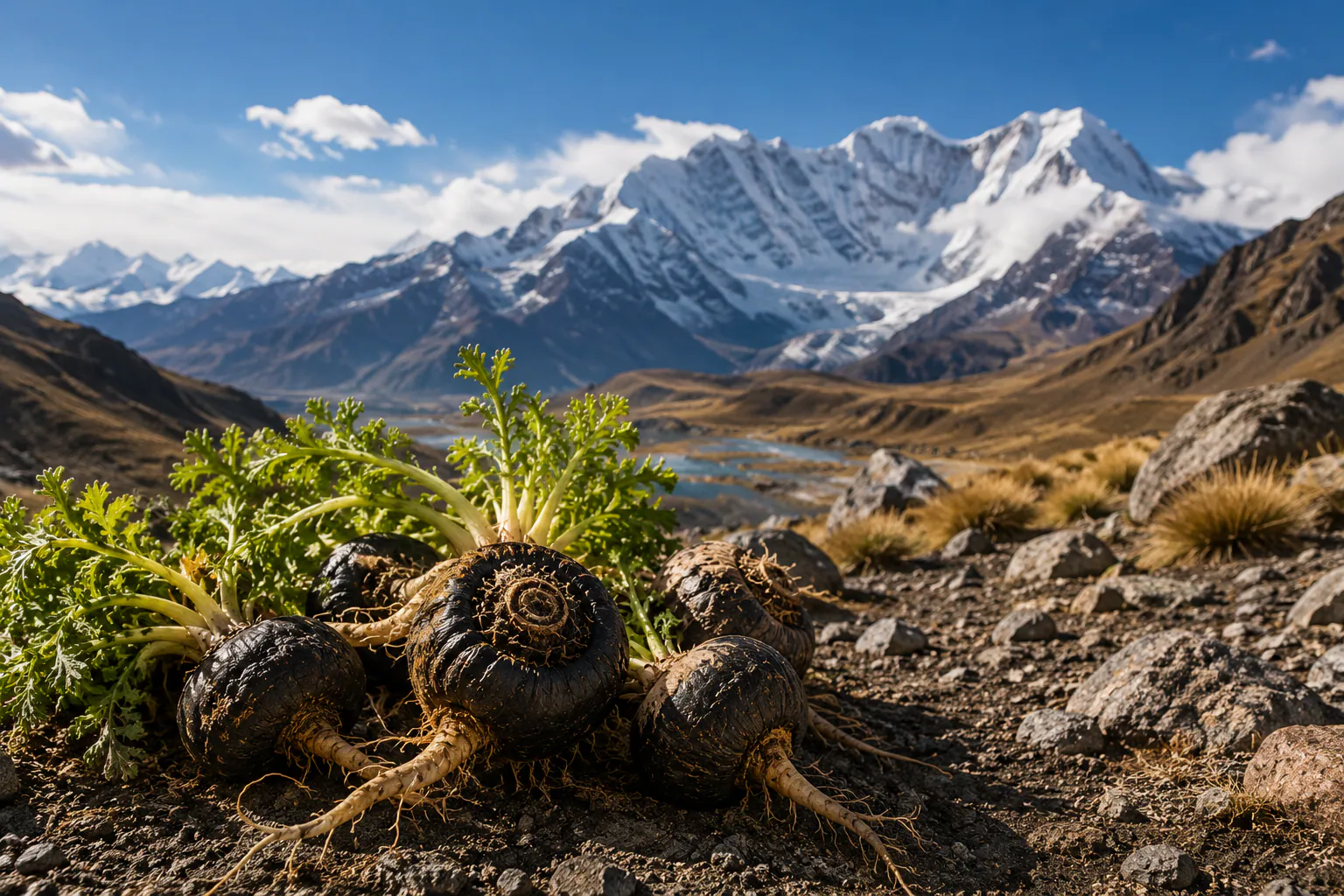
Maca (scientific name: Lepidium meyenii) belongs to the Lepidium genus of the Brassicaceae family, along with radishes, turnips, and shepherd’s purse. Above ground, it forms a low-growing rosette of leaves, usually no more than twenty centimeters tall; the edible part is the enlarged underground root, which resembles a small turnip.
Based on skin color, producing regions generally classify maca as yellow, purple, black, and other types. Maca of different colors varies in yield and composition and is commonly compared in agricultural research.
Maca is mainly cultivated on plateaus in the Andes of South America at an elevation of approximately 4,000 meters. These areas have large day-to-night temperature swings, intense ultraviolet radiation, strong winds, and soil with relatively low organic matter. Such conditions are unfavorable for most crops; maca is one of the few root crops that can be grown reliably there.
Crops grow more slowly at high elevations. Maca typically takes seven to nine months from sowing to harvest, considerably longer than related crops grown in lowland areas.
In producing regions, maca has long been used as an everyday food. Traditionally, fresh maca roots are dried for storage, then cooked or ground into powder before being added to soups, porridge, or beverages.
需要说明的是,Traditional Food Use属于当地饮食文化的记录,与现代食品加工产品之间没有直接的对应关系。
This article is general educational material covering common knowledge about botany and food processing. It does not concern any specific product and does not constitute medical or nutritional advice.
Crop rotation, fallowing, and drying—the complete journey of a highland crop from field to ingredient.
What do these factory terms actually mean? A straightforward explanation of three common processes.