
Knowledge article
Crop rotation, fallowing, and sun-drying—the complete journey of a highland crop from field to ingredient.
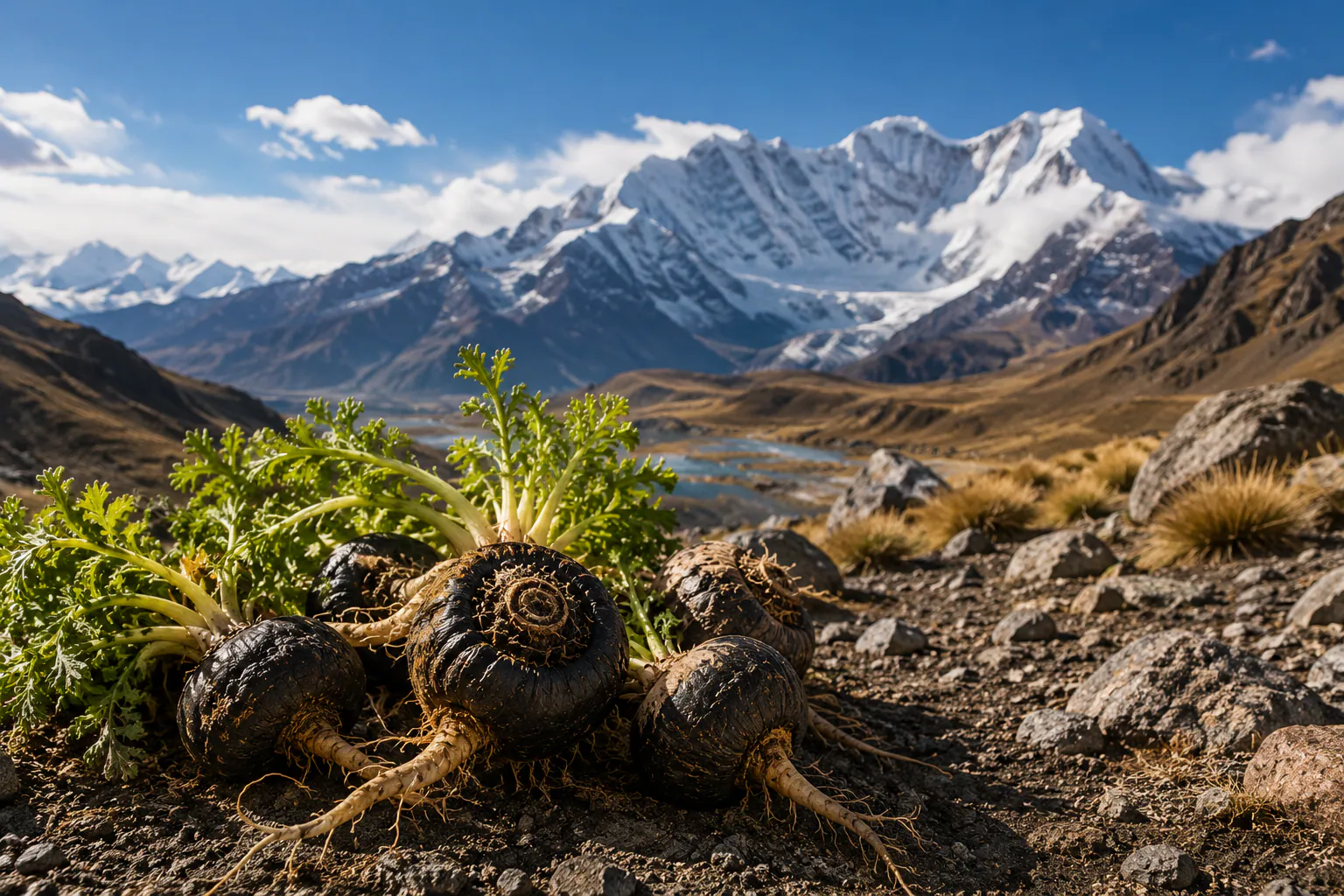
Soil fertility recovers slowly in the Andean highlands. Traditionally, farmers use long-cycle crop rotation: after maca is grown on a plot, it is often left fallow for several years before replanting, with other crops or grazing in between. This reduces yield per unit area but supports sustainable land use.
Sowing usually takes place before the rainy season begins, relying on natural rainfall because irrigation infrastructure is limited.
Maca roots are harvested by hand when mature, with soil and fine roots removed before they are air-dried outdoors. Strong sunlight and dry highland air make sun-drying the most economical preservation method. It significantly reduces moisture content, making long-term storage and transport easier.
Drying time, turning frequency, and stacking methods all affect the final consistency of the ingredient, so producing regions typically follow relatively established practices.
Once dried, maca roots enter processing. Common approaches include milling into powder, extracting active constituents, then concentrating or drying the material into a form suitable for formulation. Different processing routes produce ingredients with different solubility, mouthfeel, and stability.
For purchasers, the producing region, batch, drying method, and processing technology are all recorded in the ingredient specification sheet and serve as a basis for assessing consistency.
This article is general educational material covering common knowledge about botany and food processing. It does not concern any specific product and does not constitute medical or nutritional advice.
Explore the classification, form, and cultivation cycle of this cruciferous crop from the Andean highlands.
What do these factory terms actually mean? A straightforward explanation of three common treatments.